
*View accurate shipping rates and availability
Australia's #1 online bathroom retailer
Australia's #1 online bathroom retailer
Over 1M+ products shipped
60 day extended returns


3 Items


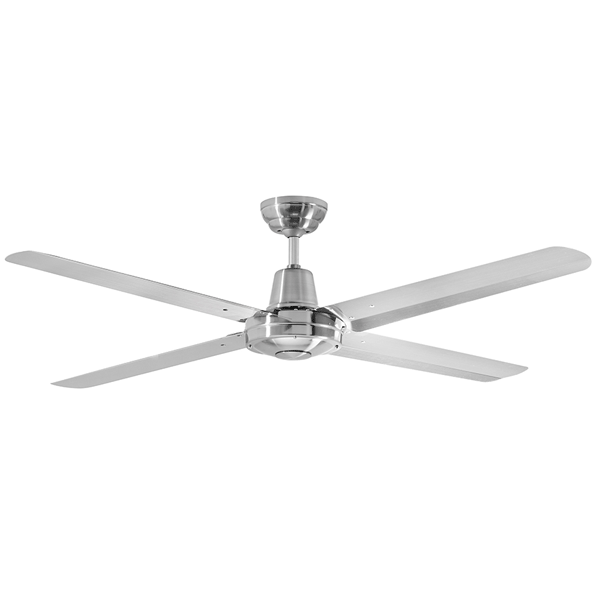

Stainless steel ceiling fans use a corrosion resistant finish that holds up better than standard painted or powder coated fans in humid or salty air. This is a small, focused range from Martec, so the choice is mainly about size and blade configuration rather than a wide spread of styles. They're a practical option anywhere moisture is a regular part of the environment.
Standard ceiling fans can corrode or discolour over time when they're exposed to ongoing moisture, salt air, or high humidity. A stainless steel body and blade set is built to resist that kind of wear, which is why this finish tends to get chosen for coastal homes, bathrooms, alfresco areas, and covered outdoor spaces rather than a typical dry indoor bedroom. If you live near the coast or you're fitting a fan somewhere with poor ventilation and regular condensation, the finish is worth the small premium over a standard painted model.
Covered outdoor entertaining areas, alfresco patios, and bathrooms with limited airflow are the most common places for a stainless steel fan. Even under cover, outdoor areas get exposed to blown rain, sea spray, and general moisture in the air, all of which will shorten the life of a fan that isn't built to handle it. Indoors, a bathroom with poor extraction or a laundry with a lot of steam can benefit from the same corrosion resistance.
As with any ceiling fan, match the blade span to the size of the space. A small alfresco nook needs a smaller fan than an open outdoor living area, and an oversized fan in a compact bathroom will feel out of proportion as well as being unnecessary for the airflow the room actually needs. Because this range is limited to a small number of models, check the specific dimensions and blade span against your space before deciding.
Fans installed in bathrooms or outdoor areas need to meet the relevant electrical safety requirements for damp locations, so installation should always go through a licensed electrician. They'll confirm the fan is rated for the specific location, whether that's a covered outdoor area or an enclosed bathroom, and that the wiring and mounting point are suitable for ongoing exposure to moisture.
This choice comes down to what you value most: upfront cost or long-term efficiency. AC motor fans are the traditional, more affordable option and remain reliable workhorses. DC motor fans, by contrast, use up to 70% less energy, run quieter, and offer finer speed control, an investment that tends to reward those who value comfort and lower running costs over the years ahead.
The right fan size is determined by the dimensions of the room, not personal preference alone. As a general guide, rooms up to 12m² suit a blade span of 900–1200mm, rooms up to 20m² call for 1200–1400mm, and larger open-plan living areas often benefit from 1400mm or above. Ceiling height also plays its part, for ceilings under 2.4m, a low-profile or hugger-style fan is the wiser choice to maintain safe clearance while still delivering effective airflow.
There is wisdom in the seasons here. In summer, fans should rotate anticlockwise (when viewed from below) to push air straight down, creating a cooling breeze. In winter, reversing the fan to spin clockwise draws warm air that naturally rises back down into the room, helping redistribute heat more evenly.
They are, and the distinction matters. Outdoor fans are built to endure the elements, rated as either "damp" (suitable for covered, sheltered areas like alfresco spaces) or "wet" (able to withstand direct rain and moisture). Installing an indoor-rated fan outdoors risks premature wear and safety issues, so it's worth confirming the rating aligns with where the fan will ultimately live.

Switch to your local store for faster shipping and local deals.


