
*View accurate shipping rates and availability


6 Items




Spend over $800 and receive free gifts in your cart. Towels, accessories and full length mirrors!
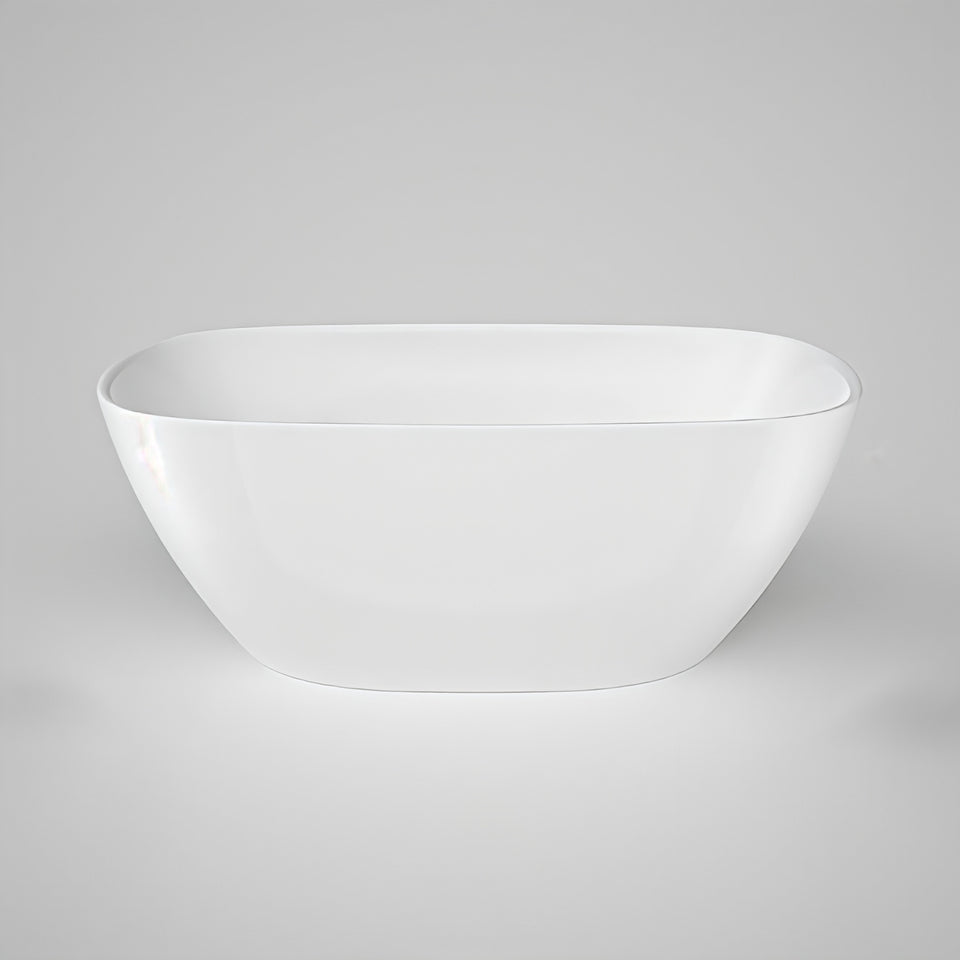
A round bath changes the intention of the room around it. Because it has no long, narrow sides, it isn't designed for a fast scrub; the circular shape typically allows for greater depth than a standard tub, letting the water sit comfortably over the shoulders during a longer soak. Almost always freestanding, it's finished on every side and can be walked around entirely, which is exactly why it reads as a considered piece of furniture rather than a plumbing fixture tucked against a wall.
A master ensuite with genuine floor space suits a round bath as a clear showpiece, positioned centrally or beneath a window to create a distinct, separate relaxation zone away from the basin and toilet.
A medium-sized bathroom can work surprisingly well with a round bath too, since its compact footprint, wide rather than long, sometimes fits into a corner or an underused spot more easily than a longer rectangular tub, freeing up the rest of the floor for a more creative layout than simply lining fixtures against the walls.
Even a smaller bathroom can accommodate a compact round "soaker" tub. A smaller diameter model still delivers a deep, upright bathing position without consuming the floor space a longer bath would require, making it a genuine alternative within a small-bath renovation rather than a compromise.
Freestanding is the standard configuration for a round bath, needing either floor-mounted or wall-mounted tapware and standing as the clear feature of the room. Island configurations are similar but often include a wider rim, useful for resting toiletries or making entry and exit easier. Built-in round baths, dropped into a tiled platform or surround, give a more integrated look with generous surrounding shelf space, though this is a more involved installation than a standard freestanding setup.
Compact soakers, around 1200mm to 1300mm in diameter, suit genuinely tight spaces. 1400mm to 1500mm sits as the most popular range, generous enough for one person to properly stretch out and relax while still fitting comfortably in most main bathrooms. 1600mm, 1700mm and larger models are properly spacious, able to comfortably fit two people, but need a genuinely large room to accommodate them well.
Depth and immersion are the primary reason people choose this shape: sitting with water up to the shoulders offers a considerably more enveloping experience than a standard tub, well suited to easing tired muscles after a demanding week. For those wanting to add jets alongside this depth, this collection's spa baths are worth considering.
Visual impact is genuine and immediate. A round bath's curve contrasts distinctly against the straight lines of surrounding tiles, vanities or square-shaped fixtures, giving the room a considered, well-composed feel rather than a purely functional one.
Placement freedom follows from being finished on all sides. Rather than being confined against a wall the way a back-to-wall or corner bath is, a round bath can sit centred in the room or positioned at an angle, opening up more interesting layout options than a typical fixed-position bath allows.
A more open feel can also result, since there are no sharp corners to navigate around, and because a freestanding tub leaves more of the floor visible underneath and around it than a bath built into a wall or corner would in the same space, the room often reads as less cluttered as a result.
A round bath is easiest to plan alongside the room's tiling and tapware, since installation type and tap style both depend on decisions made elsewhere in the renovation. The Blue Space's Tiles and Tapware collections are worth reviewing alongside a round bath selection to bring the full bathroom together.


