
*View accurate shipping rates and availability


21 Items




Spend over $800 and receive free gifts in your cart. Towels, accessories and full length mirrors!




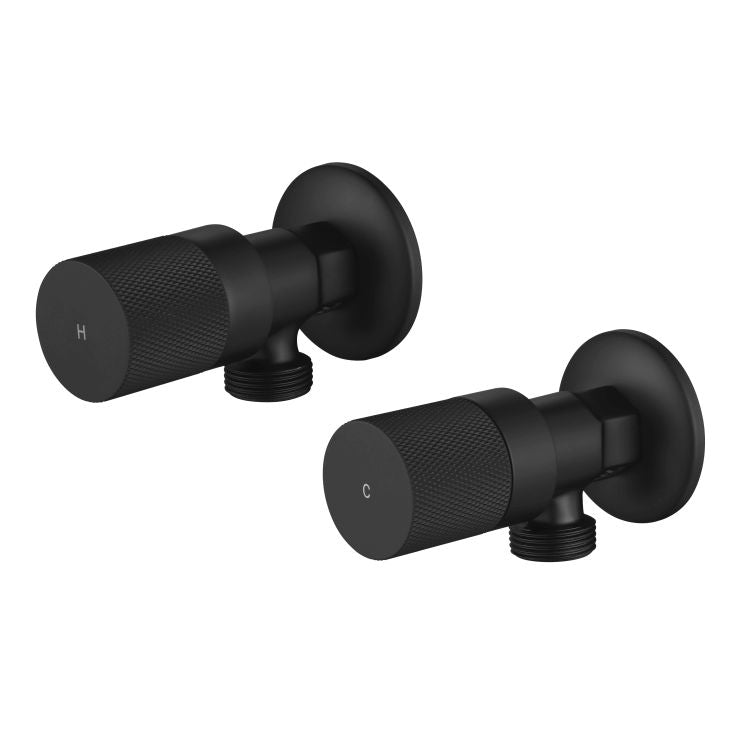
Washing machine taps rarely get much thought during a laundry renovation, since attention generally goes to tiling, the benchtop or a new appliance instead. But this small fitting has a genuine effect on both daily safety and how finished the room looks once everything else is in place.
At its core, a washing machine set controls the hot and cold water supply to the machine, letting the water be shut off if a hose bursts or the machine needs servicing. Older tapware tends to be bulky, stiff to operate, and visually dated; current tapware treats this functional fitting as a genuine design detail instead, smoother to operate, sitting closer to the wall, and available in a finish matched directly to the room's sink mixer.
Hidden connections, tucked inside a cupboard beneath the laundry tub, prioritise pure functionality: a reliable, easy-to-turn tap matters more than appearance here, since reaching into a dark cabinet to fight a stiff handle is genuinely frustrating.
Exposed connections, mounted on the wall above the machine at eye level, put the taps on permanent display, particularly in a laundry with open shelving or a clean, visible wall. Matching the finish to the room's main mixer or cabinet handles here is worth doing deliberately rather than treating the taps as an afterthought.
Tight spaces, an apartment or a European-style laundry in particular, need genuine attention to clearance. Standard taps projecting too far from the wall can push the washing machine forward, preventing bi-fold doors from closing properly. Compact quarter-turn options are generally the better choice in these tighter layouts.
Standard jumper valve taps remain the classic configuration, needing several full rotations of the handle to shut off, and relying on an internal rubber washer. They're inexpensive and functional, but the washer wears over time and can develop a drip, and turning them fully can be difficult for anyone with weaker grip strength.
Quarter-turn taps represent the current standard, shutting off with a simple 90-degree turn of the handle. Using a ceramic disc rather than a rubber washer, they operate more smoothly and last considerably longer, a genuinely worthwhile upgrade from an older jumper valve set.
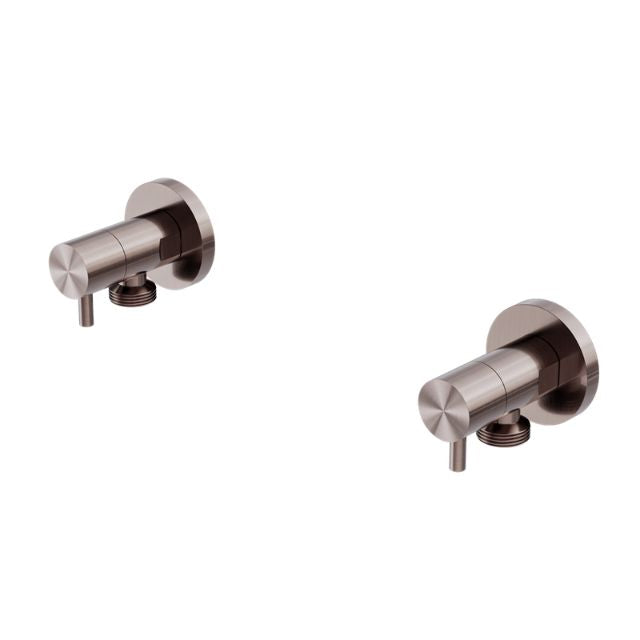
Mini stops are small and discreet, resembling a compact screw or lever rather than a full tap, well suited to a genuinely tight space or a household wanting the fitting to stay as unobtrusive as possible.
Accessible taps suit anyone with arthritis or limited grip strength, typically using a longer lever handle that can be operated with the side of the hand or an elbow rather than a firm grip, a genuinely future-proofing choice for a household.
Wall top assemblies suit a setup where the washing machine drains directly into the laundry tub, with taps mounted on the wall above matched to the sink spout for a cohesive, deliberate look rather than a set of mismatched fittings.
The laundry no longer needs to default to plain chrome. Chrome remains a timeless, dependable choice, bright and straightforward to match. Black taps bring genuine drama, particularly striking against white subway tiling for a bold, considered contrast.
Brushed nickel is a consistently popular choice, hiding fingerprints more effectively than chrome while bringing a softer, warmer character to the room. Gunmetal suits a moodier, more architectural direction. Gold and brushed brass bring genuine warmth, elevating a purely functional room considerably, while champagne offers a more subtle, understated version of that same warmth.
Emergency safety is the most important practical benefit: if a hose bursts, a modern quarter-turn tap can be shut off in a single motion, considerably faster and easier than wrestling with an old, stiff jumper valve tap during a stressful moment.
Clearance and comfort improve with a more compact tap, since the space behind a washing machine is often genuinely tight, and a bulkier, older tap increases the risk of scraped knuckles during everyday use.
A cohesive look rounds out the case for choosing deliberately: a laundry used daily benefits from feeling like a considered space rather than a purely functional one, and matching tapware to nearby cabinet handles or fittings genuinely contributes to that feeling.
A washing machine set is easiest to finalise alongside the room's sink mixer, since matching the two keeps the laundry reading as one considered space. The Blue Space's Laundry Taps and Laundry Sinks collections are worth reviewing alongside a washing machine set selection to bring the full room together.


