
*View accurate shipping rates and availability
Australia's #1 online bathroom retailer
Australia's #1 online bathroom retailer
Over 1M+ products shipped
60 day extended returns


3 Items


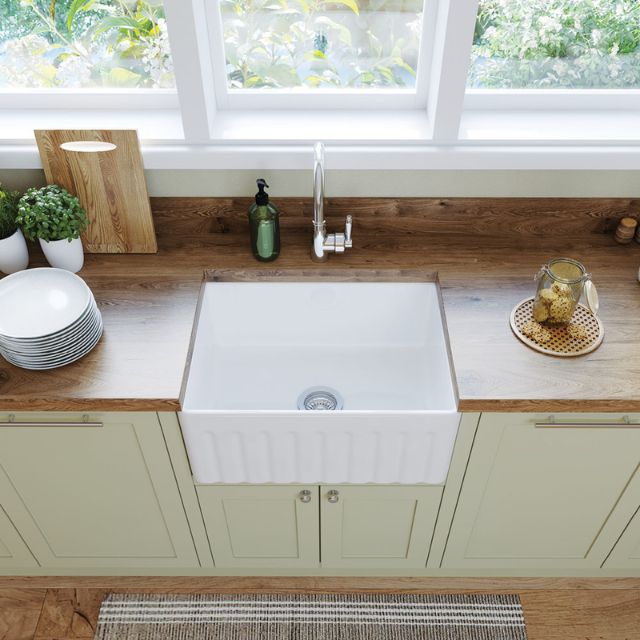


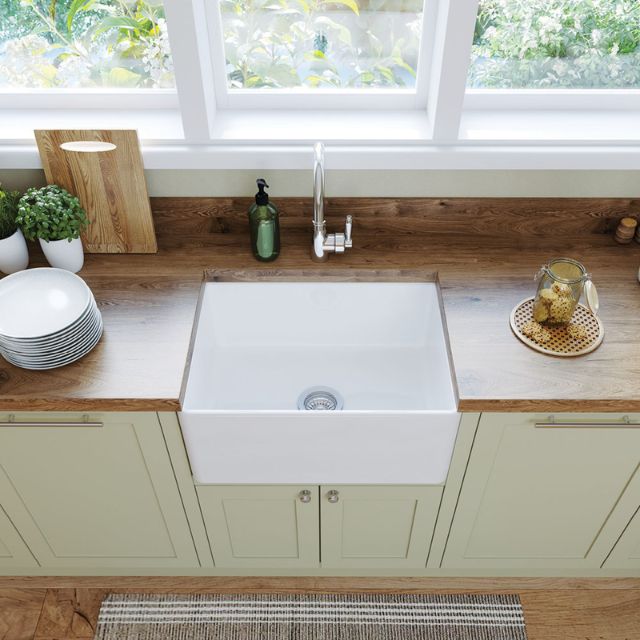


The Fienza Olivia is a butler sink range, also known as a farmhouse-style or apron-front kitchen sink, where the front face of the sink sits exposed rather than tucked fully under the benchtop. This is a small, focused range with three products, giving a short but considered set of options within the Olivia line.
A butler sink is characterised by its deep bowl and exposed front apron, which sits flush with or slightly proud of the cabinetry below rather than being hidden behind a cabinet door and benchtop overhang. This style originated in traditional kitchen design and has remained popular because the deep bowl suits larger pots, trays and washing tasks, while the exposed front becomes a visible design feature in its own right rather than a purely functional element.
Butler sinks suit homeowners renovating toward a traditional, farmhouse or Hamptons-style kitchen, where the sink itself is meant to be seen and appreciated rather than concealed. They also suit households that regularly wash larger items, since the deep bowl typically offers more usable depth than a standard inset sink.
Butler sink installation generally requires cabinetry built or adapted specifically to expose the front face, so it is worth confirming this with your kitchen designer or cabinetmaker ahead of ordering, particularly if retrofitting into an existing kitchen not originally designed for this style.
Australian kitchens commonly use stainless steel undermount or top-mount sinks, composite granite/quartz sinks, fireclay sinks (popular for farmhouse-style kitchens), and pressed steel enamel sinks. Stainless steel is the most popular for its durability, affordability, and hygiene. Composite stone sinks offer a premium look with good heat resistance. The Blue Space stocks kitchen sinks from Bao Bath, Turner Hastings, Seima, and other leading Australian brands.
The right kitchen sink size depends on your benchtop width and how you use the kitchen. Single bowl sinks typically range from 400mm to 700mm wide and suit smaller kitchens or those with a dishwasher. Double bowl sinks (700–900mm) allow simultaneous washing and rinsing and are popular in larger family kitchens. Measure your cabinet opening carefully, as the sink must fit within the internal cabinet dimensions.
An undermount (undermount) sink is mounted below the benchtop with the benchtop material finishing cleanly at the edge of the sink opening, ideal for stone and solid surface benchtops. A top-mount (drop-in) sink drops into the benchtop from above with the rim visible. Undermount sinks are easier to wipe into from the benchtop and look more streamlined; top-mount sinks are more flexible with benchtop material choices.

Switch to your local store for faster shipping and local deals.


