
*View accurate shipping rates and availability


22 Items


Spend over $800 and receive free gifts in your cart. Towels, accessories and full length mirrors!





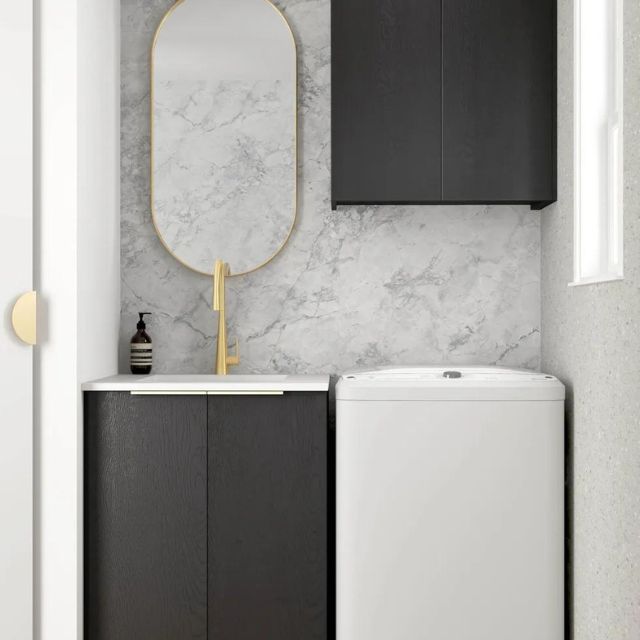
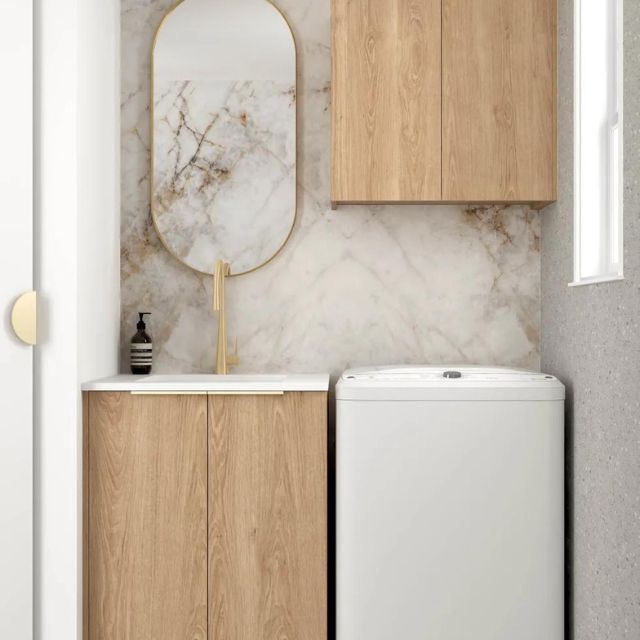


A compact laundry area works best when every fixture is chosen deliberately, since there's genuinely no room to fit something in and hope it works.
Start by assessing the available space and confirming tapware positioning against the room's existing plumbing. From there, choose the installation type, an undermount, overmount, or a combined tub and cabinet, before settling on the style and finish that suits the space.
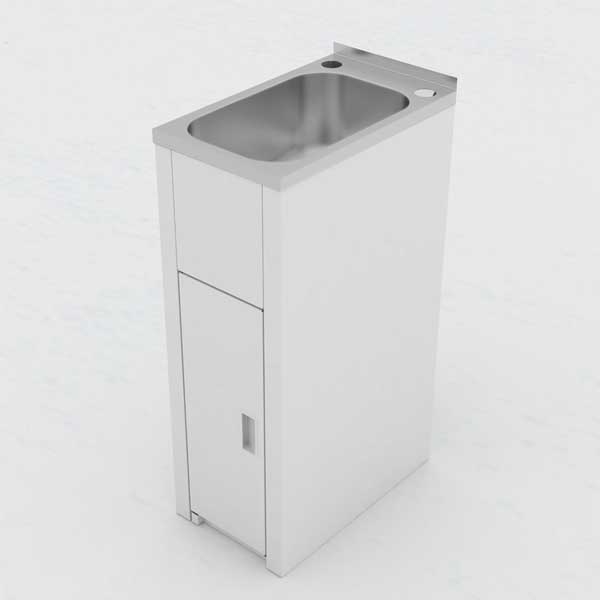
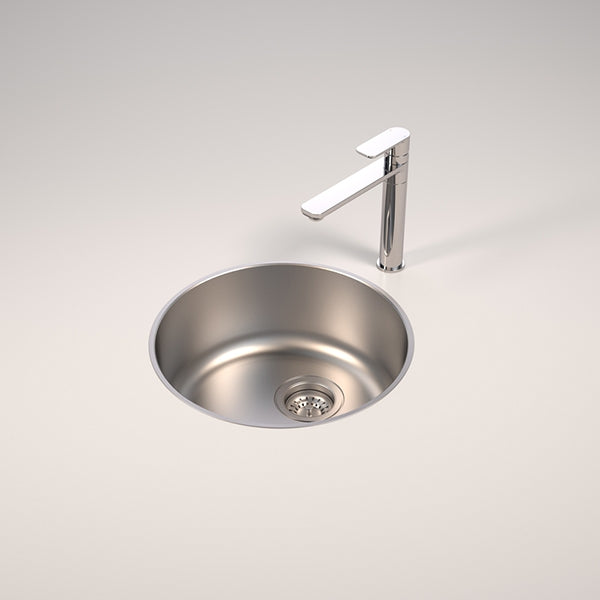
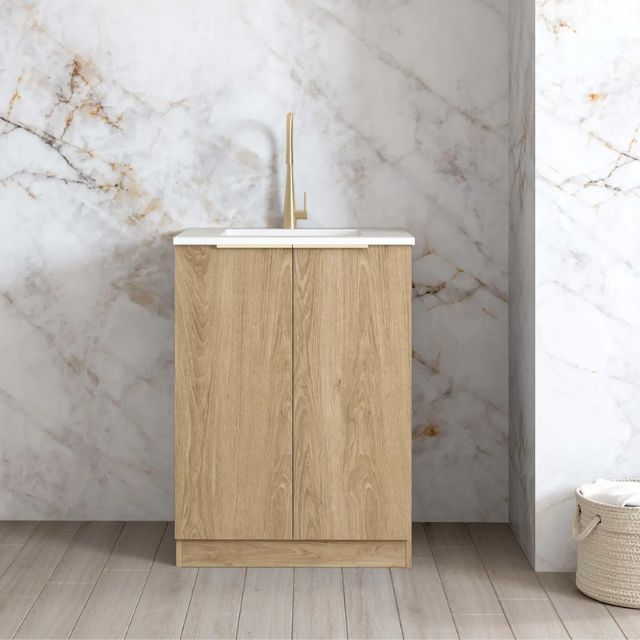
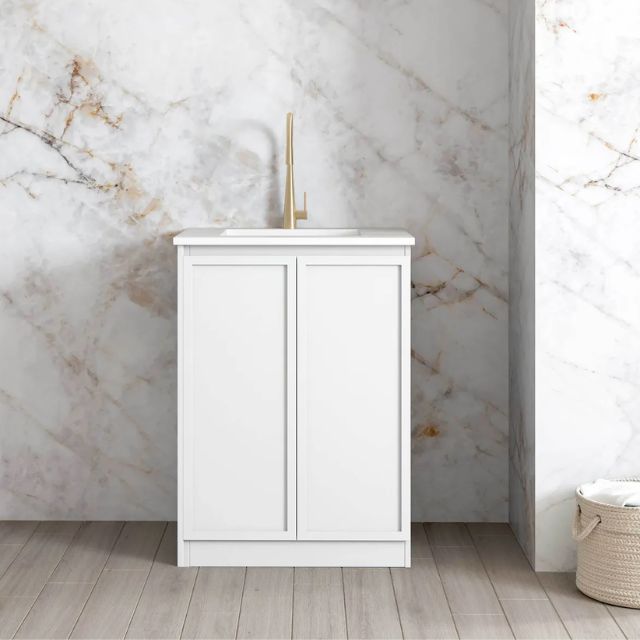
Laundry tub and cabinet combinations, like Clark's Utility Mini or Eureka ranges, bring the sink and storage together in one compact unit, genuinely useful where floor space is at a premium. Stainless steel sinks, such as Caroma's Luna round and single bowl options, suit a simpler setup where storage is handled separately. Laundry packages, like Otti's Byron, Noosa, Bondi, Hampshire and Marlo ranges at 650mm, combine a cabinet and sink as a full mini laundry solution.
Clark's Utility Mini offers a genuine 16-litre capacity in a compact tub and cabinet, while the Eureka brings a larger 35-litre compact configuration, and the Square laundry sink offers 25 litres as a standalone. Caroma's Luna range spans round and single bowl stainless steel sinks. Meir's Kitchen Mini sink, at a genuinely compact 272mm x 382mm, is available in brushed nickel, Tiger Bronze and brushed gunmetal, suited to a laundry wanting a considered finish beyond plain stainless. Otti's Byron, in natural or black oak, Noosa in fluted white, Bondi in white or a fluted finish, Hampshire in white or black, and Marlo in black, all at 650mm, offer a genuinely complete mini laundry or full cabinet set.
This collection spans under 600mm and 600mm to 1000mm lengths, in compact and standard depths, letting a laundry fixture be matched to a genuinely tight space, a combined bathroom-laundry, or a dedicated utility closet.
A laundry sink (also called a laundry tub) is a deep, heavy-duty basin designed for soaking, hand-washing and general utility tasks, typically larger and deeper than a kitchen sink to accommodate buckets, mop heads and oversized items.
Laundry sinks typically range from 30L to 70L in capacity, with widths from 450mm to 600mm fitting most standard laundry cabinet configurations. A single, deep bowl, around 360mm to 400mm deep, is the standard choice for soaking large items like doonas or sports gear, while a household with heavier laundry demands may prefer a sink with an additional small bowl or an integrated draining board. Measuring the laundry cabinet's cut-out dimensions before selecting a sink matters, since inset and undermount laundry sinks have specific cabinet compatibility requirements.
An inset (drop-in) laundry sink sits into a cut-out in the cabinet top with its rim visible on the benchtop surface, the most common and straightforward installation in Australian laundries, compatible with most cabinet materials. An undermount laundry sink is fixed below the benchtop for a seamless, flush look, but requires a benchtop material such as stone or solid surface that can support an undermount cut-out. For most laundry renovations using a standard cabinet with a laminate or stone top, an inset sink is the more practical, widely available option.
A laundry sink typically pairs with a single wall-mounted or deck-mounted mixer with a swivel spout, letting the spout reach across a wide, deep bowl. A pull-out or pull-down spray mixer is a popular upgrade, giving extra reach for rinsing large items or filling a bucket positioned beside the sink. Since laundry taps see genuinely heavy daily use, tapware with a quality ceramic disc cartridge and a WaterMark-certified, WELS-rated finish is worth prioritising, the same standards applied to kitchen and bathroom tapware in Australia.
Regular cleaning with a mild detergent and a soft cloth keeps most sinks looking their best. For stainless steel, a dedicated stainless steel cleaner helps maintain the shine, while a composite or ceramic tub is best cleaned with a non-abrasive cleaner to avoid scratching the surface.
A small laundry sink or cabinet is easiest to finalise once tapware positioning and cut-out dimensions are confirmed, since fit depends entirely on those measurements. The Blue Space's Kitchen & Laundry Taps and Laundry Cabinets collections are worth reviewing alongside a small laundry selection to bring the full space together.


